
- Home
- Residential
- Flea Treatment
Flea treatment for your home (not just your pet)
Treating the pet isn't enough — most of a flea infestation lives in your carpets, floorboards and subfloor as eggs and larvae, not on the animal. Southern Pest Co treats homes across the Sutherland Shire and St George from $150, including end-of-lease flea treatments with the certificate your agent asks for.
Why you still have fleas after treating the pet
Here is the part that catches people out: the fleas you see on the dog or cat are only a small share of the problem. The rest of the infestation is spread through your home as eggs, larvae and pupae, tucked down in the carpet pile, the gaps between floorboards and the subfloor. Wash the pet, spot-treat it, even flea-bomb the lounge, and within a fortnight the fleas are back — because a fresh wave has simply hatched out of the floor.
Fleas run a four-stage life cycle: egg, larva, pupa, adult. The pupa is the sticking point. It is wrapped in a protective cocoon that shrugs off most sprays and can sit dormant for weeks, waiting for warmth and movement before it hatches. That is why a one-off blitz never finishes the job, and why any treatment worth paying for has to keep working as the next generation emerges.
What a professional flea treatment covers
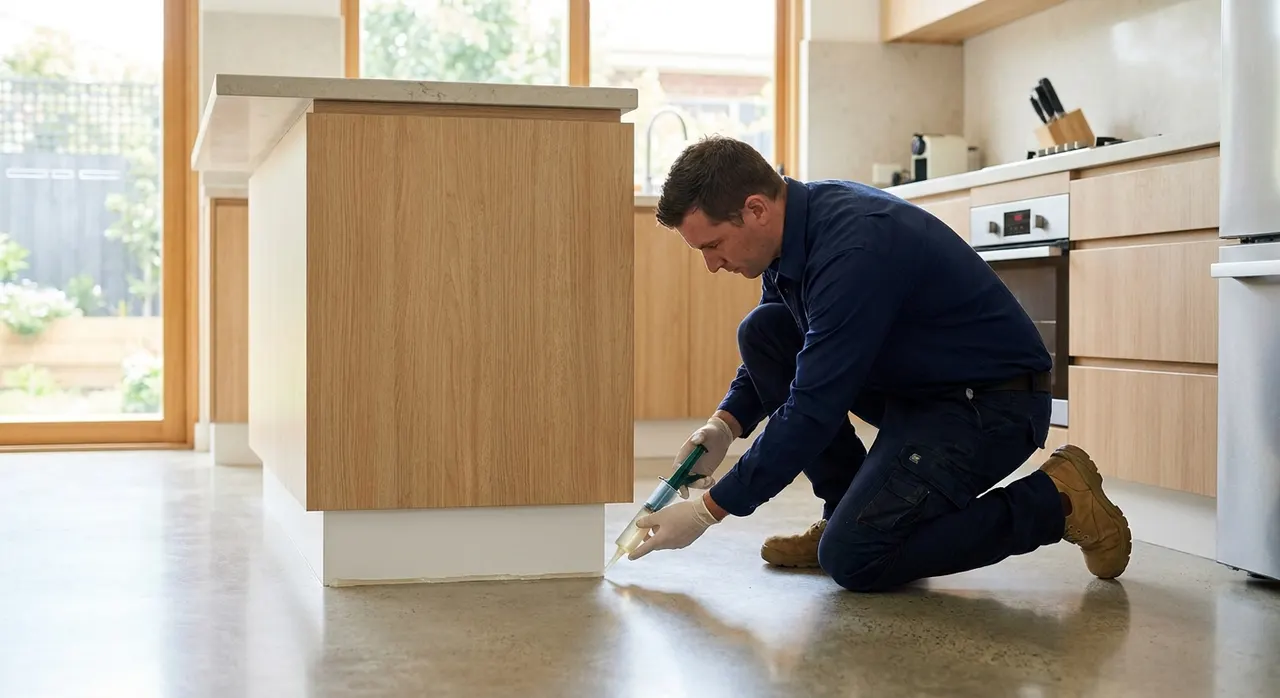
We treat the whole environment, not just the spots you have noticed. Inside, that means carpets, rugs, floorboards, along the skirtings and the soft furnishings the pet sleeps on. Where fleas have taken hold under the house, we treat the subfloor. Outside, we cover the shaded, sandy spots along the fence line and under the deck where pets rest and eggs collect. The products we use include an insect growth regulator that stops larvae developing, so you are hitting the cycle at more than one point.
A standard flea treatment starts from $150, with the price confirmed up front once we know the size of the home and how far the fleas have spread. Every job carries our Return & Re-treat Guarantee — if the fleas are back within the warranty period, so are we.
End-of-lease flea treatment and your bond
Moving out of a rental where a pet lived? A flea treatment with a certificate is often part of getting your bond back cleanly. It is worth knowing exactly where you stand, because the rules changed in NSW from 19 May 2025. A landlord generally cannot require professional fumigation at the end of a tenancy — the one exception is where it was attached as a reasonable condition of pet consent, and even then only where the pet is a mammal that lived indoors. So an end-of-tenancy flea treatment is not automatically compulsory; it depends on what is lawfully written into your agreement.
Where that condition does apply, we carry out the treatment and give you a certificate your agent will accept. For the full picture on who is responsible for what, read our guide to landlord and tenant pest responsibility in NSW, or head straight to end-of-lease pest control to book the certificate treatment.
Before and after your treatment
A little prep makes the treatment far more effective. Before we arrive, vacuum the carpets and hard floors thoroughly and empty the vacuum straight into an outside bin — the vibration and heat coax young fleas out of the cocoon, right into the treatment. Wash the pet's bedding on a hot cycle, and make sure the pet itself is treated by your vet, otherwise it just re-seeds the home. Clear the floors so we can reach the edges and under furniture.
Afterward, keep children and pets off the treated areas until the surfaces are dry — your technician gives you the exact re-entry time for the products used, as general guidance always defers to the product label. Then keep vacuuming every day or two for a couple of weeks. You will often see the odd flea for a while as new ones hatch into the treatment and die; that is the product doing its job, not a sign it has failed. If you are also getting bitten around the arms and neck at night rather than the ankles, it may be worth checking our bed bug treatment page, because the two are easily confused.
Frequently asked questions
How do I get rid of fleas in the house?
Treat the animal and the home together. The pet needs a vet-recommended flea product, and the house needs its carpets, floorboards, soft furnishings and subfloor treated, because that is where the eggs and larvae live. Vacuum daily as well — it lifts eggs and triggers young fleas to emerge into the treatment.
Why do I still have fleas after flea-bombing?
Flea bombs sit on top of the carpet and barely reach the eggs and pupae buried in the pile and floorboards. Pupae can also wait weeks before hatching, well after the bomb has worn off. A professional treatment targets the whole life cycle and keeps working as new fleas emerge.
Do I need flea treatment at end of lease?
Only if your tenancy agreement lawfully requires it. In NSW, a landlord can require end-of-tenancy fumigation only as a reasonable condition of pet consent, and only where the pet is a mammal that lived indoors. If that condition is in your agreement, we treat and give you the certificate your agent will accept.
How long after treatment can pets come back?
Keep pets and children off treated areas until the surfaces are fully dry — your technician confirms the exact time for the products used on the day. Once it is dry, ventilated and free of odour, everyone can return. Always follow the label and the technician’s specific advice.
Do fleas live in floorboards?
Yes. Flea eggs roll off the pet and settle deep into carpet pile, the gaps between floorboards and the subfloor, where the larvae feed and develop. That is exactly why treating the pet alone never clears an infestation — the house has to be treated at the same time.
Get a straight answer and a fixed quote
Same-week service across the Sutherland Shire and St George. If covered pests come back within the service warranty period, so do we — at no charge.